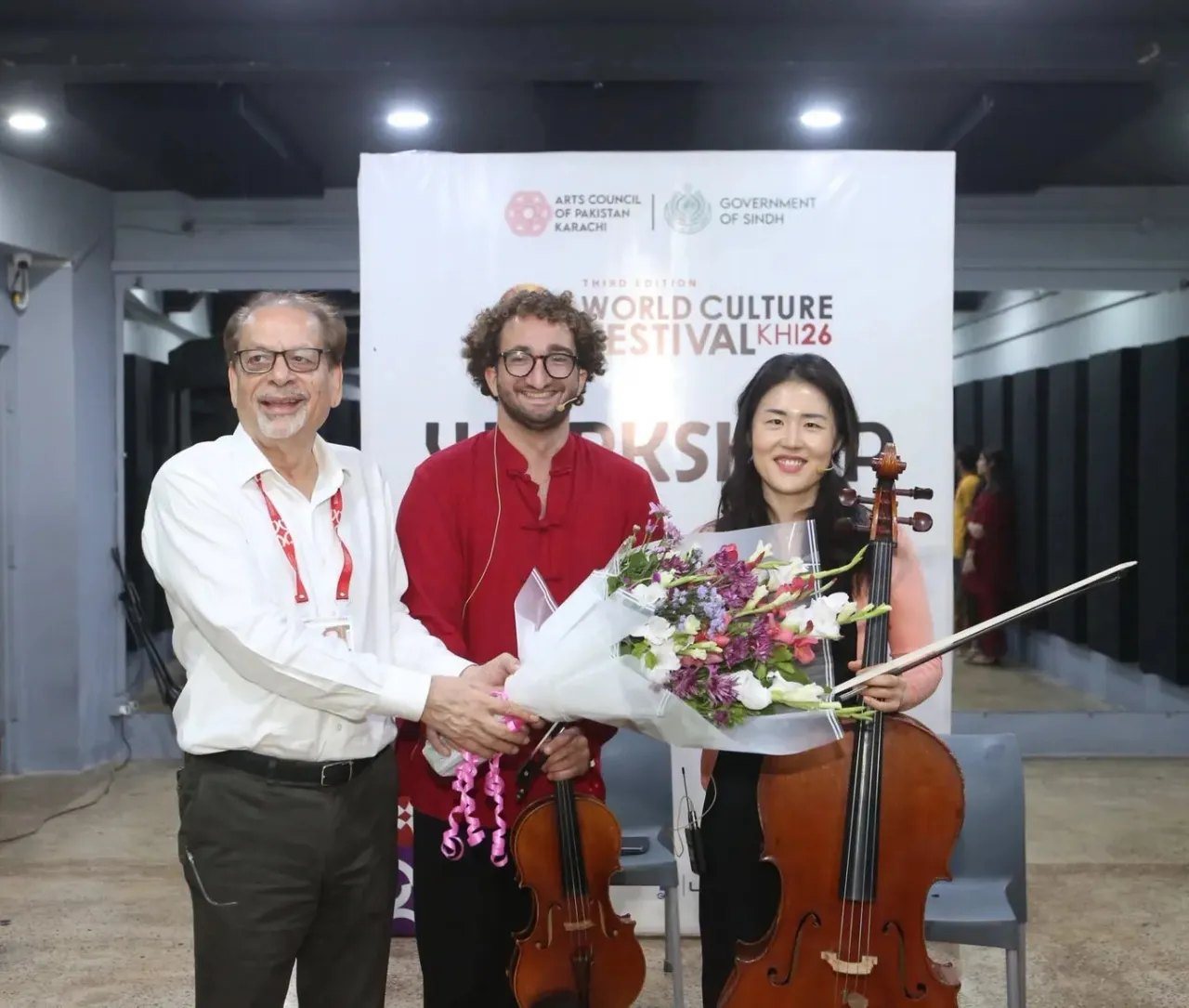
ALIF DUO: TWO STRINGS, ONE TIMELESS HARMONY AT THE WORLD CULTURE FESTIVAL
There are journeys that begin with a plane ticket but then, there are those that begin with a letter: Alif, the first in the Arabic alphabet, representing a quiet symbol of origin and unity. It was the chosen name of the ensemble that graced our World Culture Festival on its second and fourth day, becoming the theme of the weekend.
Alif Duo is the Abu Dhabi-founded pairing of Korean cellist, Seulki Lee and French violist, Antonin Le Faure, both associated with the United Arab Emirates National Orchestra. Their classical programme for Cello and Viola is rooted in European chamber music yet wide open to the world. Over the festival, they performed, taught, listened, and quickly won our hearts.
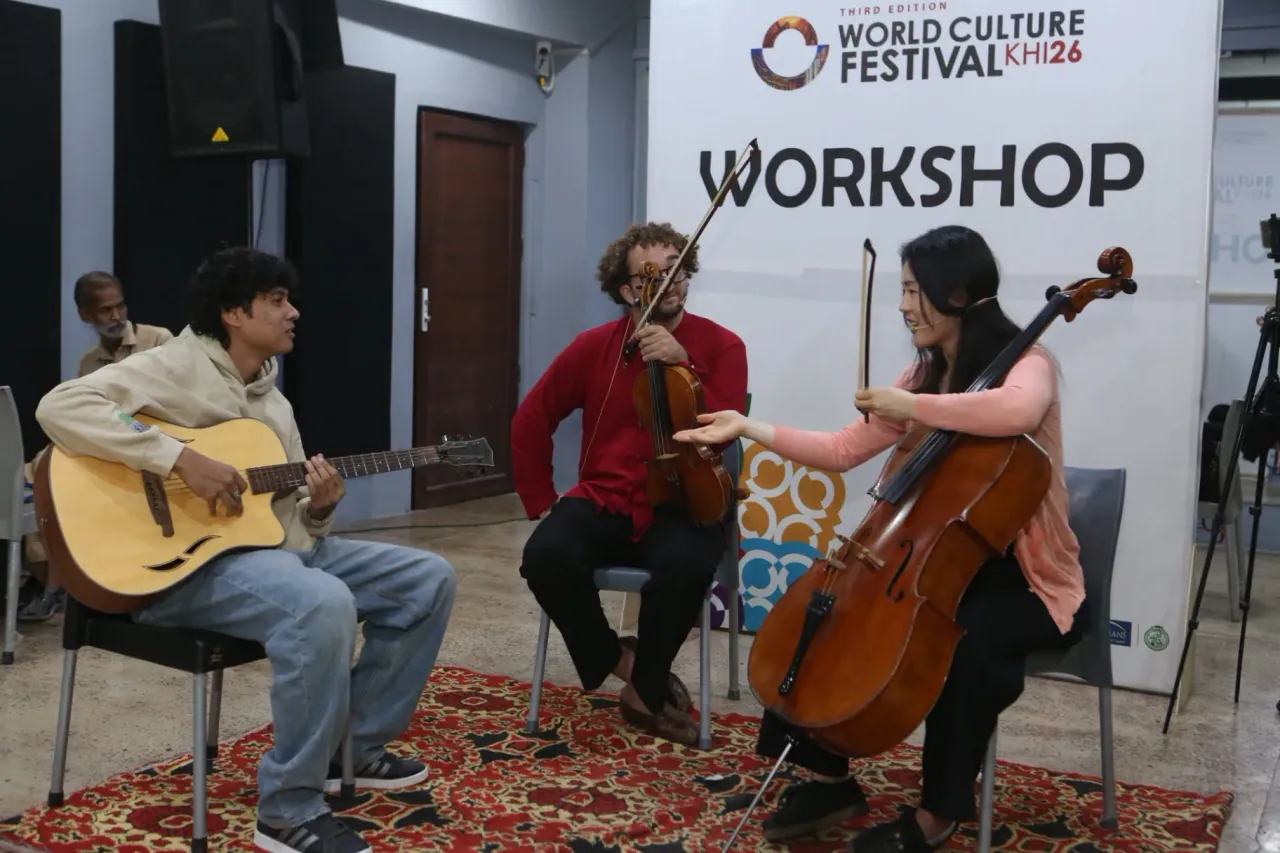
Arrival: Curiosity Over Certainty
The best travel stories begin without a map. "We honestly didn't know what to expect," Seulki said. "But it sounded wonderful, and we wanted to meet people from different parts of the world. I'm so glad we came, because the experience was far beyond what I imagined."
Not everyone around her understood the choice. "When I said I was going to perform in Pakistan, some people were surprised," she recalled. "But the people here are among the kindest and warmest I've ever met. Their hospitality has been extraordinary." Travel has a way of replacing assumption with understanding, and she is a proof.
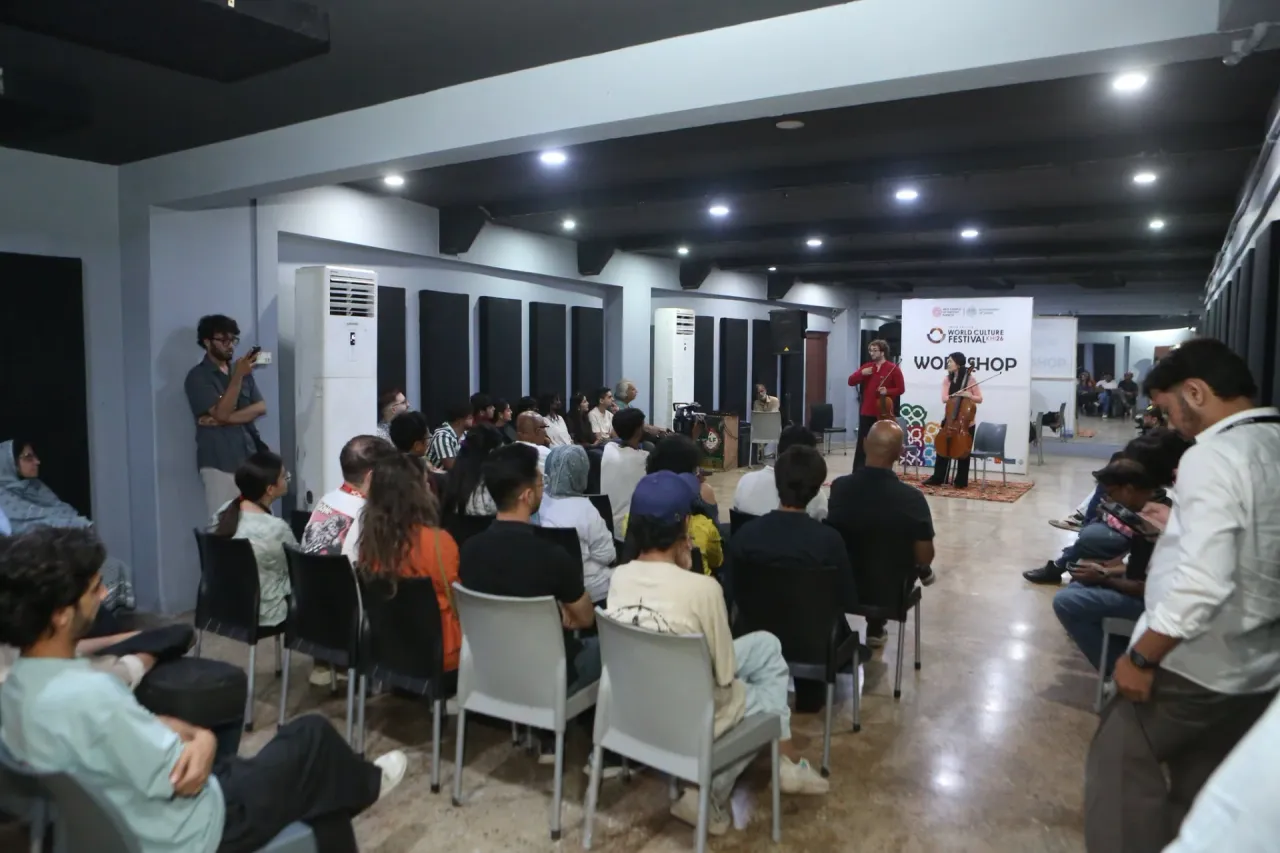
Golden Hour on Stage
The concert on October 30, 2026 was, for Antonin, a highlight of his career. "I've rarely felt such warmth from an audience," he said. "While I played my instrument, people were tapping along, so joyful and so present. It came straight from the heart."
The connection was mutual. "The room was filled with love of music," he said.
"We could have played for two or three hours, but we had only thirty minutes," Seulki expressed enthusiastically. "I realized I hadn't enjoyed performing this much in a long time. I wasn't tired afterward. In fact, I felt more energy."
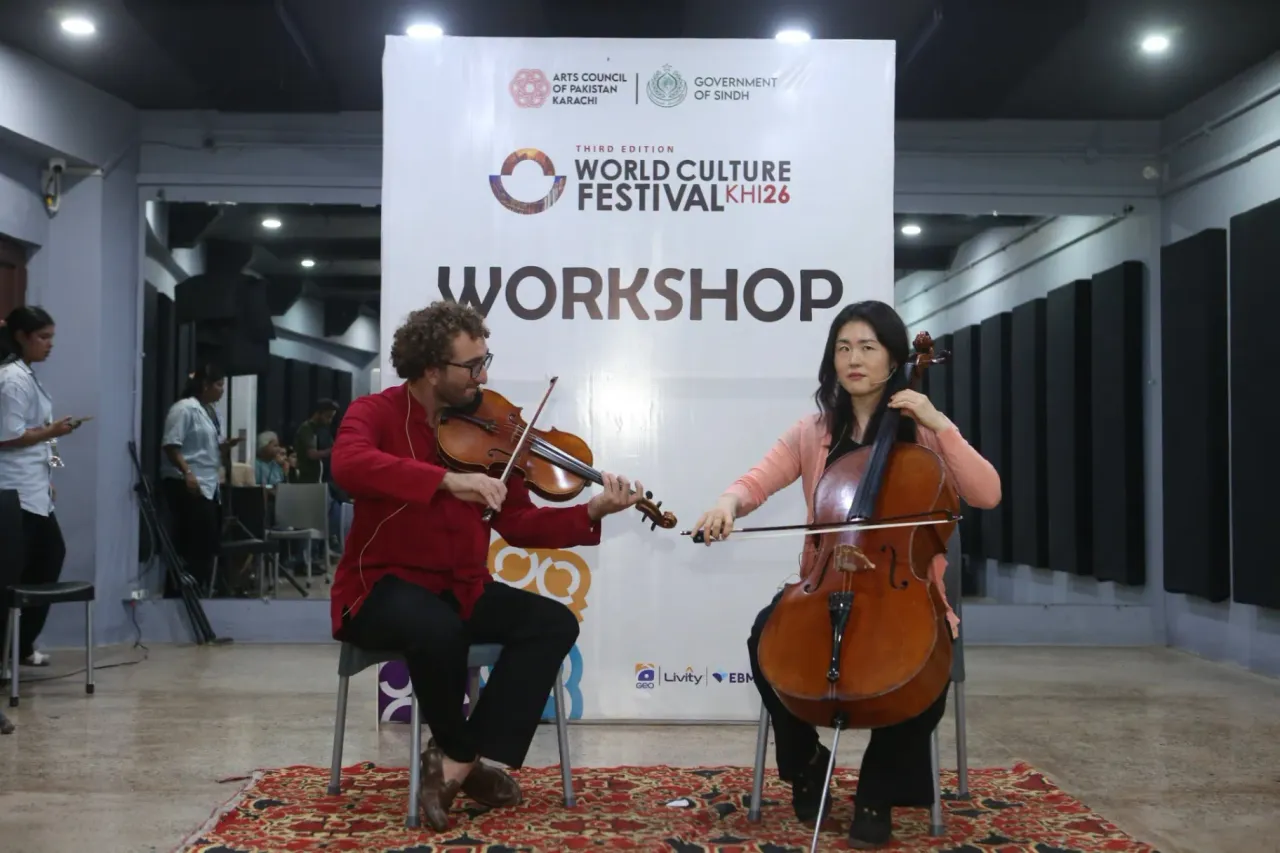
The Masterclass: Why a Cello? Why a Viola?
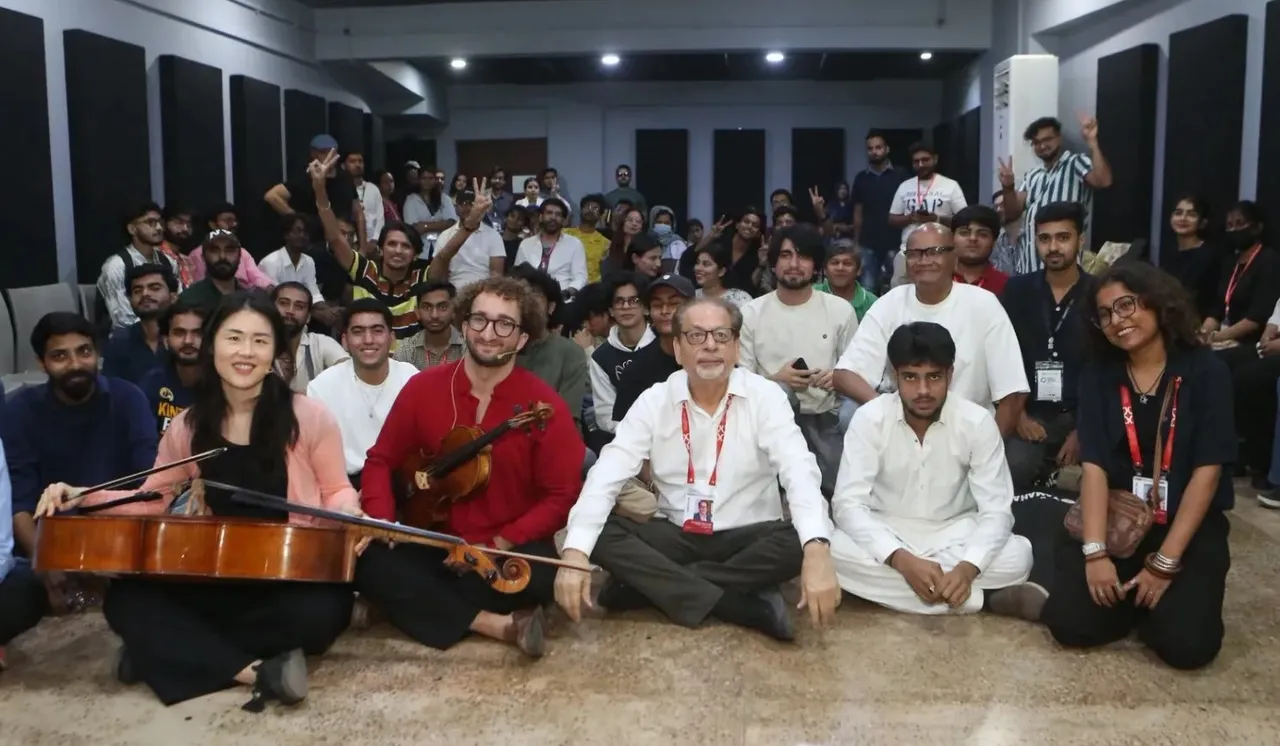
On November 01, 2026, the masterclass became a gentle conversation about identity. Seulki chose the Cello for its resemblance to the human voice. "I'm not a very good singer, and I don't always find the right words," she told the students. "With the Cello, I don't have to. I play, and people feel it," she added.
Antonin's story reads like a French film. A child in choirs, dreaming of singing in the streets, he was advised by his teacher to try the Viola. "When my voice began to change, I still wanted to sing high notes," he said. "The Viola became my new voice."
Speaking about the experience of conducting the masterclass, both the artists were pleasantly surprised by the participants' response. They described the attendees as receptive, curious, and attentive, creating an encouraging environment for artistic learning and interaction.
Music Beyond Borders: A Universal Human Connection
In the concluding remarks, Seulki reinforced the idea that music has no borders. Its emotional language can be understood and appreciated by people regardless of their cultural backgrounds, nationalities, or personal circumstances.
While Antonin opined that everyone has the ability to feel and connect with music, even when they come from completely different environments or speak different languages. According to him, this universality is one of the most beautiful qualities of artistic expression.
Weekends like these remind us why we gather. Two musicians crossed continents with a Cello and a Viola, and in doing so, they showed a room of young artists that the first letter of every conversation is the same: openness. Alif, indeed.
But this is only the beginning of the alphabet. More performances, more workshops, and more unexpected friendships are on their way, and we would love for you to be part of them. Follow World Culture Festival on Facebook and Instagram to stay updated on upcoming performances and workshops. Come curious, bring a friend, and let the next chapter begin with you.