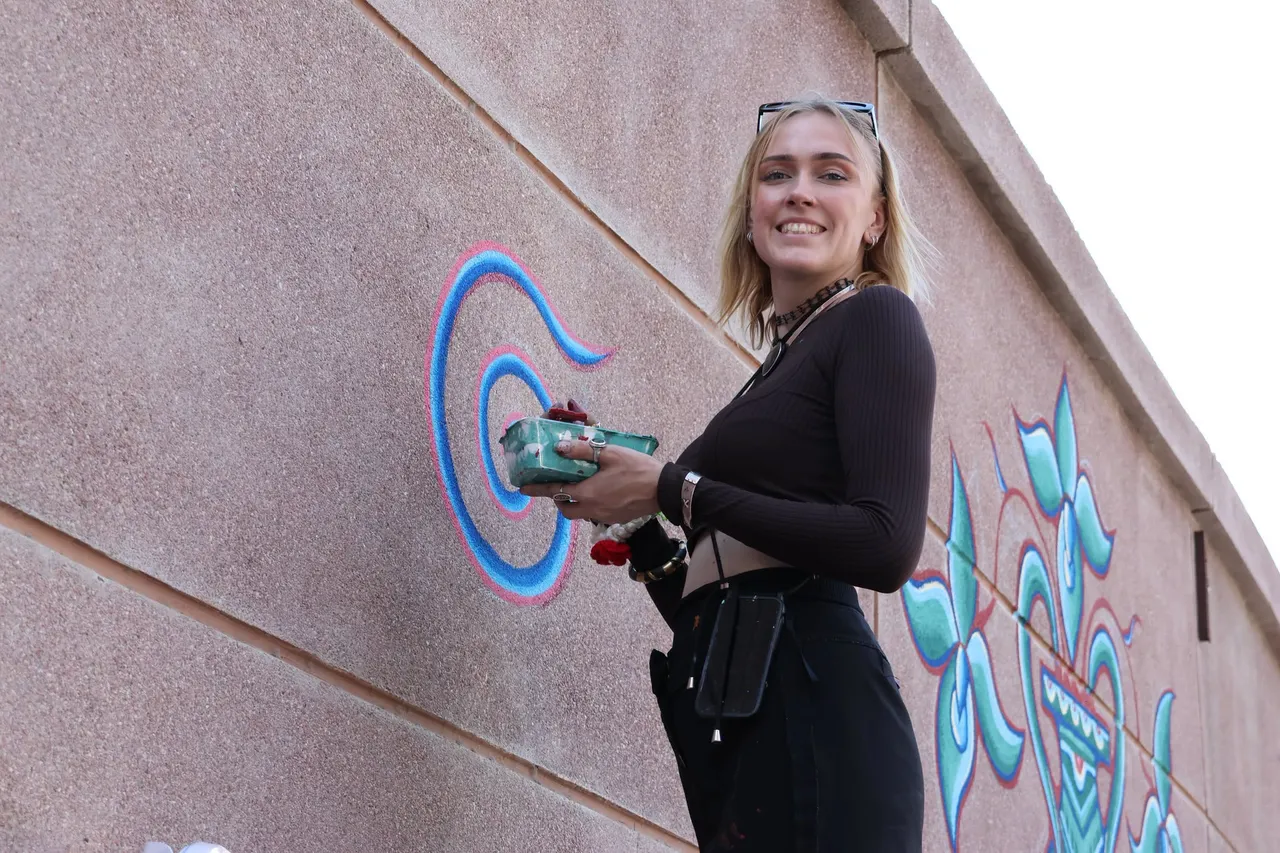
WHEN WALLS SPEAK: DOMI’S JOURNEY THROUGH INTUITION, SUSTAINABILITY AND SELF-DISCOVERY
For this multidisciplinary artist and muralist hailing from Sweden, creating art is less about following a predetermined design and more about listening to the walls, the materials, the environment, and most importantly, her own intuition. Known for her unexpected patterns and distinctive visual compositions, Domi Forest approaches every project as an evolving conversation between herself and the space she is transforming.
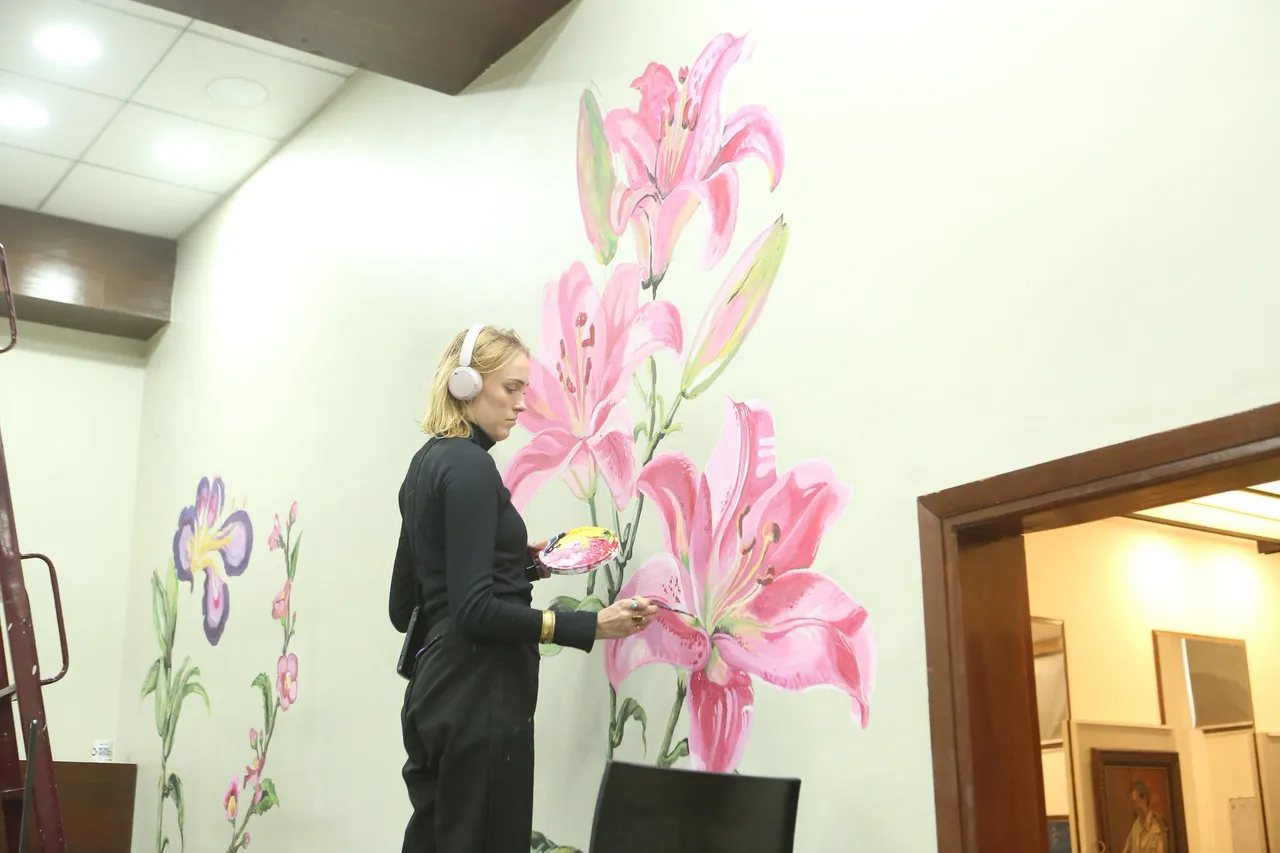
One of the most rewarding compliments she has received is that people have never seen anything quite like her work. Her ability to create surprising patterns and unconventional combinations gives her murals a distinctive identity, making each piece an exploration of possibilities rather than a reproduction of familiar ideas.
Discovering True Calling Through Murals
Creativity has always been part of her life, but pursuing art professionally was not something she initially imagined. Growing up in a family without an artistic career to look up to, she never considered that making things could become a viable profession.
Although she had always enjoyed drawing and creating, it was through travelling and experimenting with wall painting that she discovered her true calling. “Painting on walls allowed me to maintain concentration and immerse myself in the creative process in a way that drawing on paper did not,” she shared.
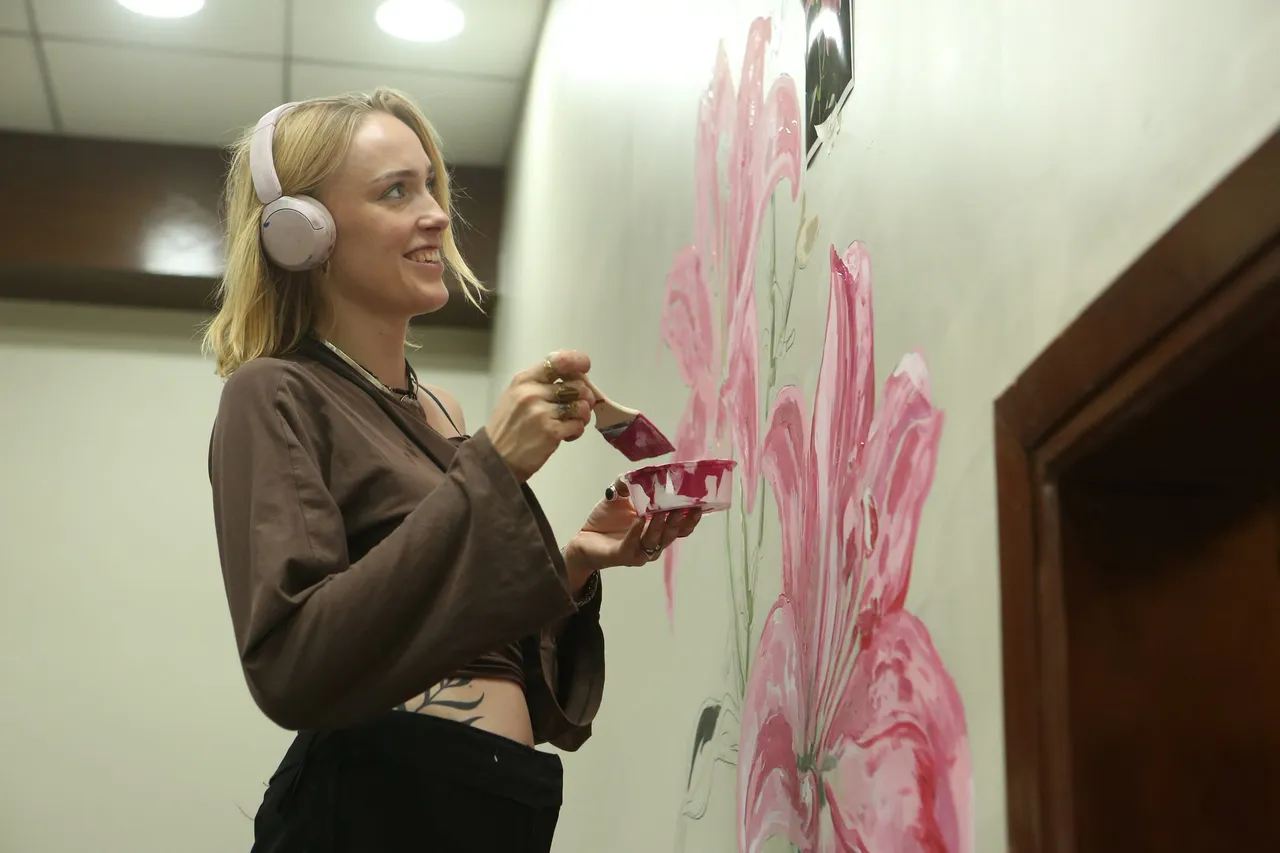
That discovery changed her relationship with art. She found a medium she genuinely loved and began recognizing it as something she wanted to pursue seriously.
Speaking about her inspiration, it has come from different places, including artists in Sweden, people she has encountered online and individuals she has met along the way.
Having also worked as a ceramics teacher when she was younger, she sees creativity as something much broader than any individual medium. For her, everything can be art, including the way people conduct themselves and interact with others. At its heart, she believes art is also about making things more beautiful.
Creating with a Conscience: Art and Sustainability
An important aspect of her multidisciplinary practice is her commitment to reusing existing materials. While creating work in Sweden and Portugal, she has made a conscious effort to rescue discarded paint from shops.
“Paint shops in Sweden often have to dispose unused paint and pay for its disposal. Instead of allowing these materials to go to waste, I try collecting them and incorporate them into my artwork,” she explained. Even paint that is slightly damaged, imperfect or available in unusual colors can find a new purpose through her creative process.
Her objective is to maintain the lowest possible carbon footprint while making art. This approach is closely connected to her concerns about climate change, an issue she admits gives her considerable anxiety.
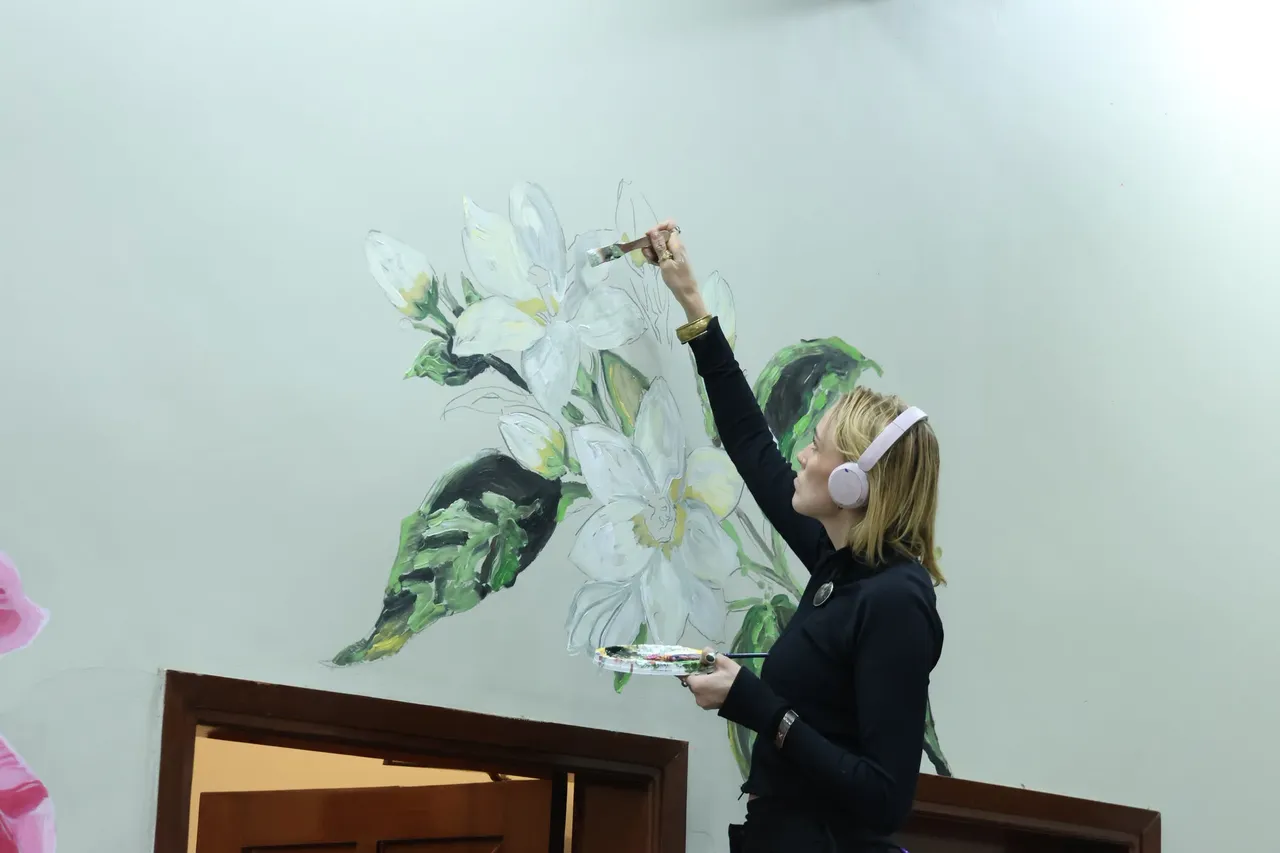
Nature, she believes, is fundamental to human existence. “We are all part of it, yet modern society increasingly distances itself from the natural world through excessive consumption and dependence on artificial materials,” she shared.
Pointing out how deeply plastic has entered everyday life, including the clothes people wear, she expresses concern about the speed at which people consume and discard things.
She believes protecting nature is a collective responsibility and that people should try to live more slowly and consciously whenever possible. In her view, human ego, greed and the relentless pursuit of money are also contributing to environmental destruction.
Her art, therefore, becomes an extension of her environmental philosophy: finding beauty in what others discard and creating something meaningful without constantly demanding new resources.
Eyes, Ears and the Language of Intuition
Nature, mythology and symbolism are recurring influences in her work, but her approach to visual symbolism is not necessarily guided by fixed interpretations.
Among her favorite recurring elements are eyes, which she has been drawing since childhood. She is equally fascinated by ears, particularly large ears decorated with jewelry. She also appreciates the aesthetic of stretched earlobes, describing their appearance as interesting and visually appealing.
When the Wall Becomes the Creative Guide
Perhaps the most fascinating aspect of her mural practice is the relationship she develops with the spaces she paints.
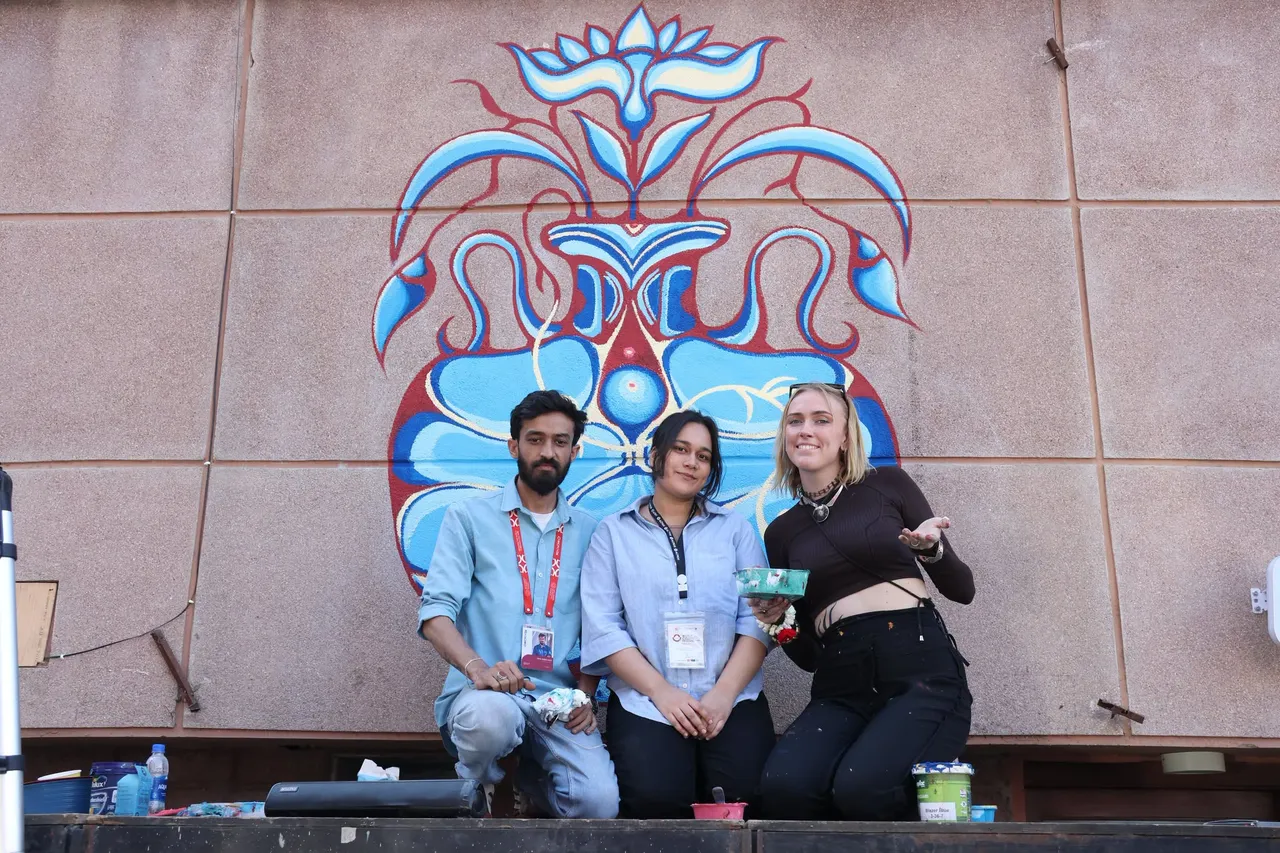
When adapting a design to a particular wall or community, she allows the atmosphere of the location to influence her decisions. She describes the experience as a conversation with the wall itself, explaining that the wall communicates with her and that they decide together what should appear on it.
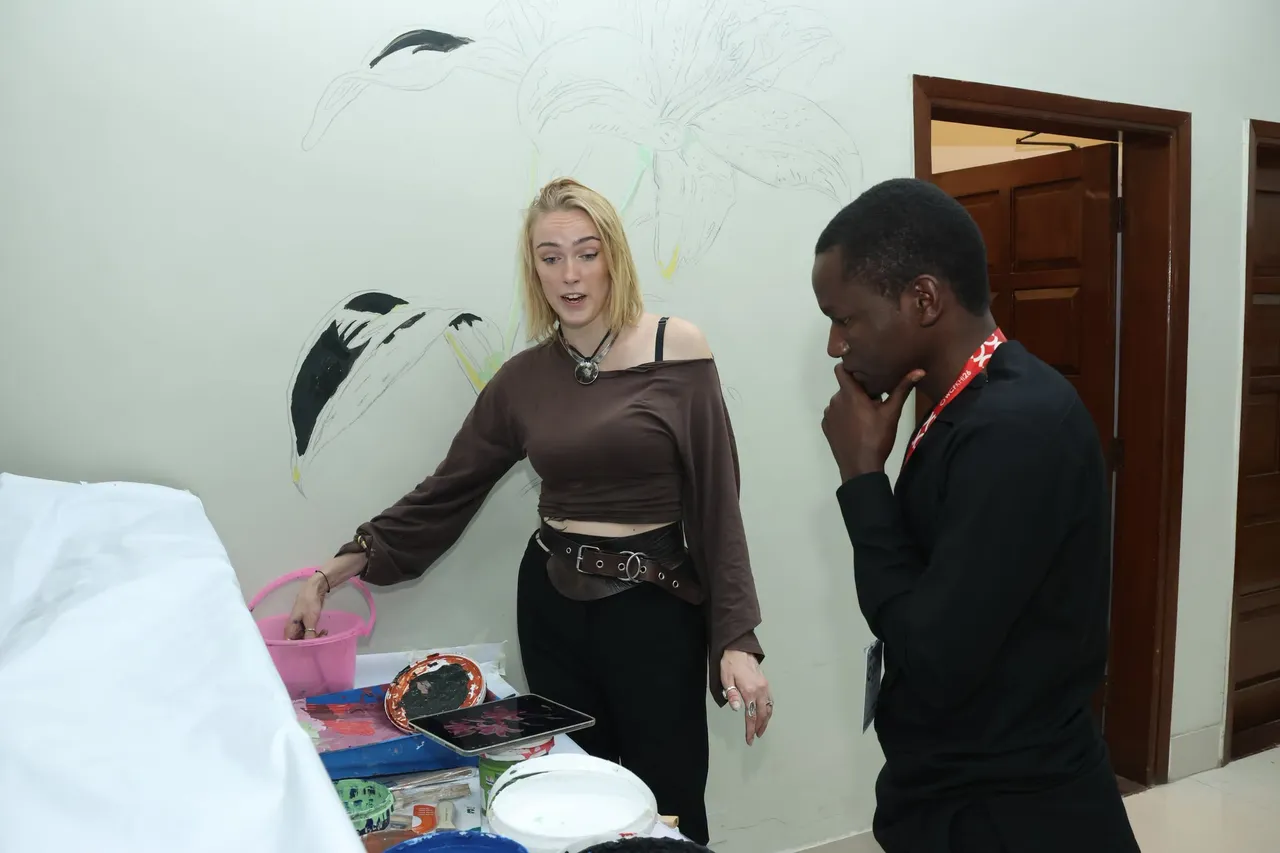
This is also why she finds it difficult to prepare an exact sketch before beginning a project. She does not always know what the final composition will look like.
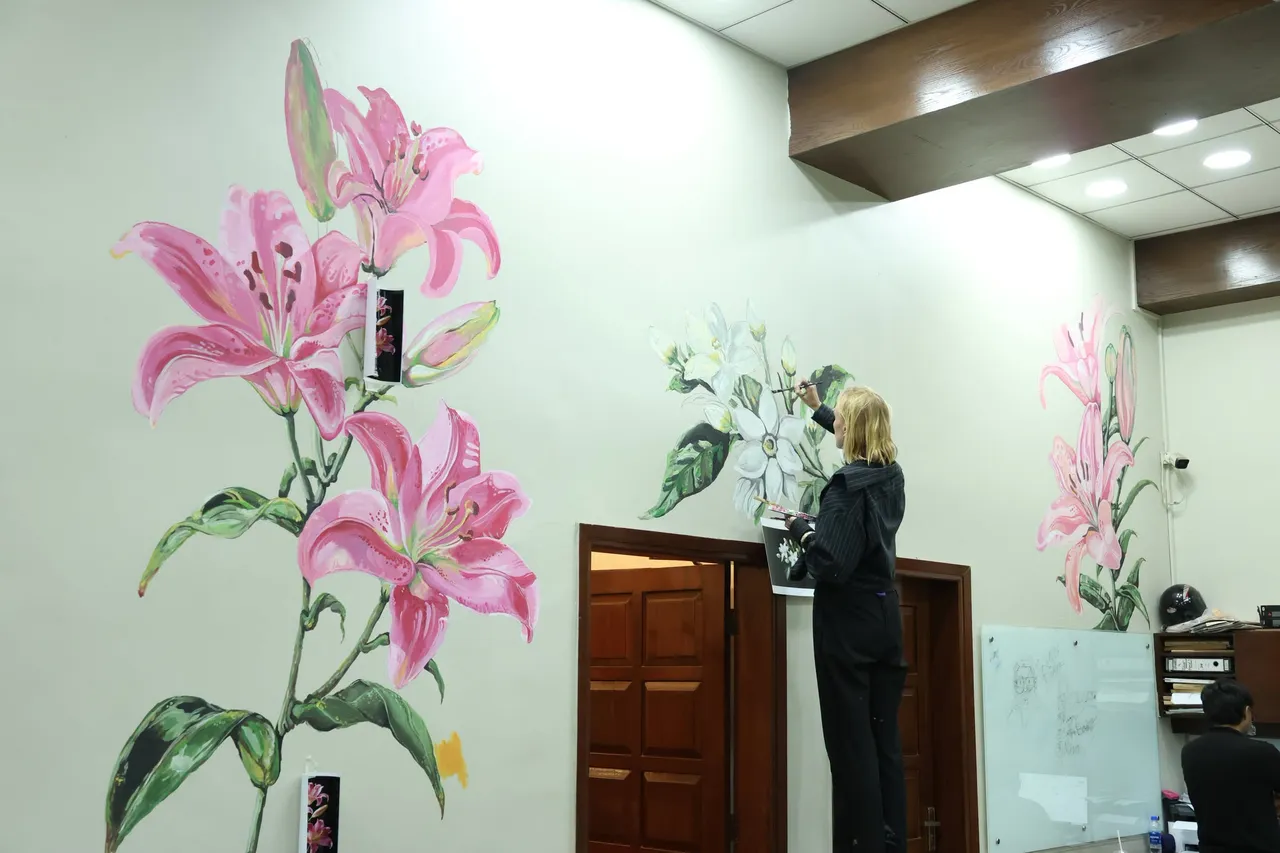
Flowers, patterns and other elements frequently emerge during the painting process. She might begin with one idea and gradually discover that the artwork needs something entirely different.
“While there are people who prepare digitally edited designs and reproduce them exactly on the wall, I prefer the uncertainty and freedom of discovering the final composition as the artwork unfolds,” she expressed.
The Vietnam Mural: Painting Through Heartbreak
Among the projects she has undertaken, one mural in Vietnam holds particular emotional significance.
There, she renovated an entire rooftop bar, transforming a deteriorating space through paintings across its floors and walls. The central feature was a striking orange wall depicting a white figure of a pregnant woman, with another figure lying within her belly.
The project was especially meaningful because of what she was experiencing personally at the time. She had recently gone through a difficult breakup and was navigating the emotional aftermath while working on the mural.
She remembers spending long nights painting the large orange wall, carefully completing its intricate lines and details. Although she does not consider the artwork particularly complicated, the experience of creating it made it deeply personal.
When asked whether painting the mural served as a form of catharsis or distraction, she offered a different perspective.
For her, art is not about escaping difficult experiences. It is about returning to oneself.
“I believe that distraction often involves running away from something without confronting it. Creating art, however, allows me to reconnect with my roots, find a sense of safety and rediscover myself,” she expressed.
Inspiring Others to Trust Their Creative Instincts
When it comes to how audiences should respond to her work, she does not believe in prescribing emotions. People should feel whatever comes naturally when they stand in front of her murals.
However, she hopes her artistic journey will encourage others to step outside their comfort zones and experiment with things they may have previously hesitated to try.
Advice to Young Artists and Women
Sharing advice for young artists, particularly women who aspire to pursue this form of art, Domi stressed the importance of believing in oneself. She explained that no one else would believe in an individual as strongly as they could believe in themselves. Therefore, artists must become their own biggest supporters before seeking encouragement, validation or recognition from others.
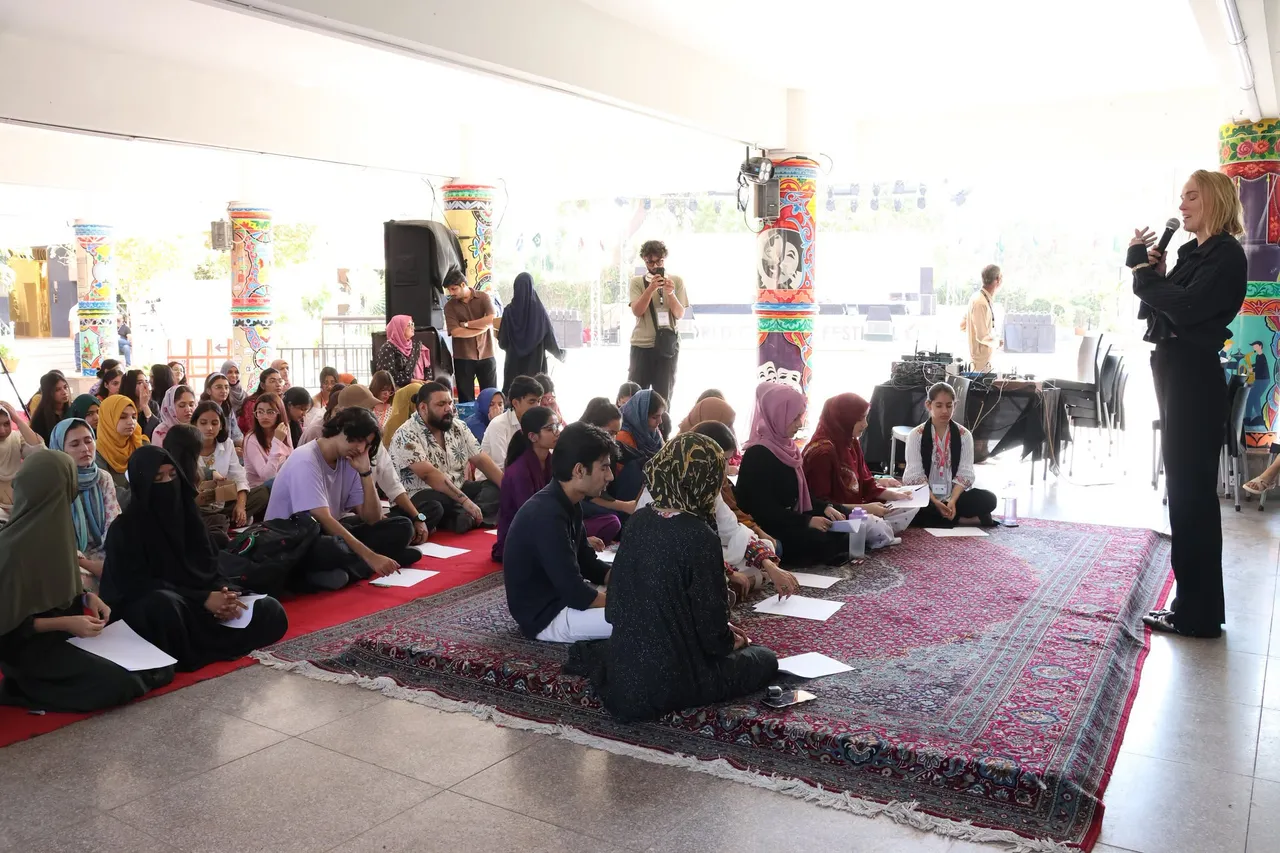
She further encouraged young artists to give their chosen craft their complete dedication rather than becoming preoccupied with what they might achieve through it. According to Domi, when people pursue something wholeheartedly without constantly chasing rewards, they can go a long way. She also urged them not to shy away from situations that feel intimidating or uncertain. Taking risks, she explained, is an essential part of personal and artistic growth. Rather than simply accepting the challenges associated with risk-taking, she encouraged artists to enjoy the experience, describing it as an exciting way to discover new possibilities.
A Dream Wall in Stockholm – The Journey Ahead
Asked where she would paint a wall if she could choose any location in the world, Domi initially struggled to identify a particular destination. Eventually, she mentioned a large wall near a train station in Stockholm, a place she had grown up seeing regularly. Although it is an ordinary wall, she has watched other artists paint there and can imagine herself doing the same.
Domi Forest’s journey reminds us that the most meaningful art often begins with listening: to a wall, to the materials at hand, and above all to one’s own instinct. By finding beauty in what others discard and trusting the uncertainty of the creative process, she shows that art can be both a conscious act and a way of returning to oneself.
Want more stories from the artists who brought color and culture to Karachi? Follow World Culture Festival on Facebook and Instagram for highlights, performances, and behind-the-scenes moments.